Ant infestations can turn a pleasant backyard into a frustrating problem fast. Whether they’re building mounds in your lawn, marching across your patio, or invading garden beds, outdoor ants aren’t just a nuisance, they can damage landscaping and compromise the structural integrity of wooden garden structures. Terro ant killer is one of the most effective over-the-counter solutions available to homeowners tackling ant problems outdoors. This guide walks you through exactly how to identify where ants are nesting, properly apply Terro ant killer, and keep your yard ant-free without unnecessary guesswork or wasted effort.
Table of Contents
ToggleKey Takeaways
- Terro ant killer uses borax to target entire colonies rather than individual ants, with delayed-action effectiveness allowing worker ants to carry poison back to the queen over several days.
- Locate ant nests by following visible trails in early morning or late afternoon, checking under pavers, fence lines, and tree bases, since colonies may be 10-20 feet from visible foraging activity.
- Apply Terro liquid baits in protected stations spaced 5-10 feet apart in warm, dry weather, or use dust formulations applied directly into mound entrances for better results in dry conditions.
- Refill bait stations every 3-5 days for the first one to two weeks, with most colonies collapsing within 3-7 days of steady bait consumption—patience and consistency are essential to colony elimination.
- Store Terro products safely away from children and pets, supervise outdoor application, and avoid treating food preparation areas or directly around vegetable gardens where you handle produce.
- For severe or large infestations where DIY Terro application feels overwhelming, hiring a licensed pest control professional can provide ongoing monitoring and preventative treatments.
Understanding Terro Ant Killer and How It Works
Terro ant killer comes in a few formulations, but the most common outdoor product is Terro Liquid Ant Baits or Terro Dust. The active ingredient is typically sodium tetraborate decahydrate (borax), which works slowly by design. When ants consume the bait, they carry it back to the colony, poisoning the queen and workers over several days. This delayed-action approach is crucial, a fast-acting insecticide would kill foragers before they return home, leaving the nest intact and the colony to rebuild.
The beauty of Terro for outdoor use is that it targets the entire colony rather than just individual ants. The product comes in ready-to-use liquid bottles or granulated dust formulations. Liquid baits work best in warmer weather and are ideal for container gardens or areas where you can place bait stations. Dust formulations work in drier conditions and can be applied directly into visible ant mounds or along ant trails. Understanding which formulation matches your yard conditions and ant species is the first step toward success.
Terro is also relatively safe for outdoor use around pets and children when applied according to label directions. That said, it contains boric acid, so you’ll want to read the label carefully and follow all precautions.
Identifying Where Ants Are Nesting in Your Yard
Before you apply anything, locate the ant colonies. This is non-negotiable prep work, spraying random spots wastes product and time. Walk your yard in the early morning or late afternoon when ants are most active. Look for visible mounds (though not all species build obvious mounds), ant trails, and areas where soil appears disturbed or sandy.
Follow ant trails to find entry and exit points. Ants typically move in lines, so once you spot one ant, trace its path backward. You’ll likely find a nest nearby, often within a few feet of where foragers are working. Check under pavers, along fence lines, around tree bases, and near garden beds. Some species nest in existing cavities rather than creating mounds: look for activity emerging from cracks in concrete, hollow logs, or dense mulch.
Pay attention to ant behavior. If ants are clustering around a specific spot (like a plant or spilled food), that’s a feeding station, not necessarily the nest. The actual colony may be 10 or 20 feet away. In some yards, especially larger properties, you might have multiple colonies. Identifying each one prevents reinfestation from neighboring nests. Homeowners often miss secondary colonies and wonder why ants return, thorough inspection during application planning saves frustration later.
Step-by-Step Application Guide for Outdoor Use
Preparing Your Outdoor Space
Clear the area around ant mounds or trails of debris, thick mulch, or dense vegetation that might obstruct bait placement. You don’t need to excavate, just remove loose obstacles. If you’re using liquid bait, check the weather forecast: avoid applying before rain, which will wash away the product. Liquid baits work best when temperatures are above 60°F. Dust formulations are less weather-sensitive but also work better in dry conditions.
Wear gloves and safety glasses during application, even though Terro is relatively low-toxicity. Avoid breathing dust if using the granulated form, wear a dust mask if applying in calm conditions where dust might linger. Keep children and pets away from treated areas until the product has settled, typically 30 minutes to an hour.
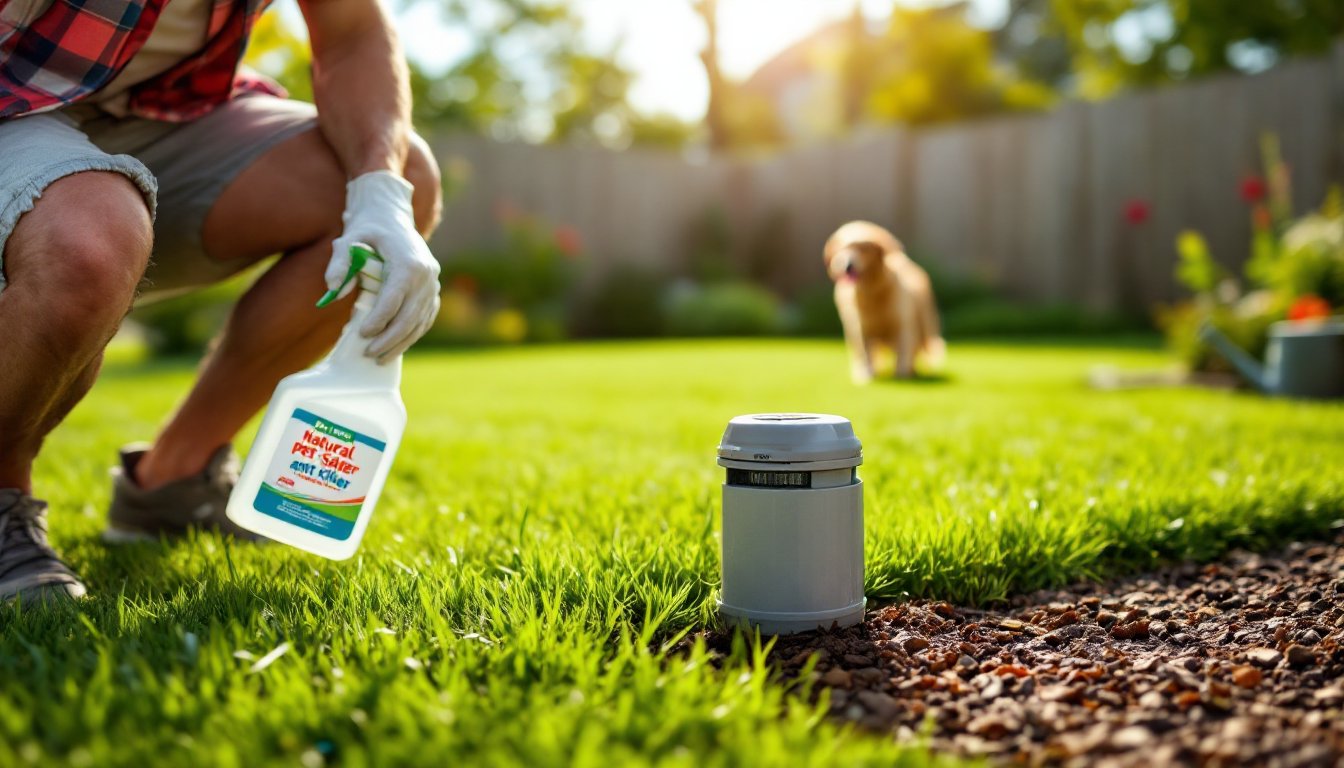
If using liquid baits, place them in bait stations (small plastic containers with access holes) rather than pouring liquid directly on soil. Bait stations protect the liquid from rain and keep it concentrated where ants will find it. You can buy dedicated Terro stations or improvise with small containers weighted down so they won’t tip. Space stations every 5-10 feet along ant trails and around mounds.
Applying Terro Around Problem Areas
For liquid baits: Squeeze the provided applicator bottle to place small pools of liquid at station entrances. You want enough bait for ants to find and feed, but not so much that it spreads beyond the station. A few drops per station is plenty. Ants will begin feeding within hours. Refill bait stations as ants consume the liquid, typically every 3-5 days for the first week or two. Most colonies collapse within 3-7 days of steady bait consumption, but continue monitoring and refilling for up to two weeks to ensure the queen is eliminated.
For dust formulations: Apply directly into ant mounds using the applicator bottle (most Terro dust products come with a squeeze bottle). Insert the nozzle into the mound entrance and squeeze until you’ve deposited product 1-2 inches deep into the tunnels. You don’t need to saturate the entire mound, ants will move through dust and distribute it internally. Apply to multiple entry points if the mound has several visible openings. Reapply dust after rain or every 5-7 days until activity stops.
Monitoring and timing: Check bait stations or treated areas every 2-3 days. Heavy ant traffic around baits is a good sign, it means they’re feeding and carrying bait back. Don’t be tempted to switch products mid-treatment: consistency matters. Different Terro products can be used together (liquid and dust in different areas), but mixing them can reduce effectiveness.
If activity persists after two weeks, you may have missed a satellite nest or are dealing with a particularly large colony. Treat secondary areas or increase bait station density. Some ant species are slower to die than others, carpenter ants, for example, may take longer than smaller species.
Safety Precautions and Best Practices
Terro products are labeled for outdoor use and are considered relatively safe when used as directed, but they contain boric acid, which is toxic if ingested in large quantities. Read the label completely before opening the product. Place bait stations where children won’t mistake them for toys or food containers, think like a curious toddler, not an adult.
If you have dogs or cats that roam freely, supervise outdoor use. Pets might knock over bait stations or try to eat bait. Boric acid in small amounts from a single bait station is unlikely to cause serious harm, but why take the risk? Use covered bait stations (most commercial ones are covered) and position them away from pet areas when possible.
Don’t apply Terro to surfaces where you prepare food, this is obvious for picnic tables, but also avoid treating directly around vegetable gardens where you might handle soil and produce together. Wash hands after application and before eating or drinking. If you spill liquid bait, wipe it up with a damp cloth and dispose of materials in the trash (not in compost).
Store Terro products in a cool, dry place away from children and pets, ideally in a locked cabinet. Check expiration dates: older products lose potency. Most Terro products remain effective for several years when stored properly. Never mix Terro with other pesticides unless the label specifically allows it, combining products can create unpredictable results or reduce effectiveness.
Consider wearing gloves and a long-sleeved shirt during application, especially if you have sensitive skin. If you accidentally contact bait or dust, wash thoroughly with soap and water. If someone ingests Terro, contact Poison Control (1-800-222-1222 in the US) or seek medical attention. While serious poisoning from a single bait station is rare, it’s better to err on the side of caution with toxic substances.
For large infestations or if you’re uncomfortable applying pesticides yourself, a licensed pest control professional can handle the job. Many homeowners find DIY Terro application manageable and cost-effective: others prefer professional expertise. Professional services often include ongoing monitoring and preventative treatments that may not be worth the cost for minor infestations, but absolutely worth it for severe cases.
Conclusion
Eliminating outdoor ant infestations with Terro ant killer requires patience and attention to detail. Identify nests thoroughly, apply the right formulation for your conditions, and resist the urge to rush results. Most homeowners see significant colony collapse within a week and complete control within two to three weeks. The delayed-action approach that makes Terro effective also means you won’t see instant gratification, but you will get thorough, lasting results. Follow label directions, prioritize safety, and don’t skip prep work, that’s how DIYers keep their yards ant-free all season.