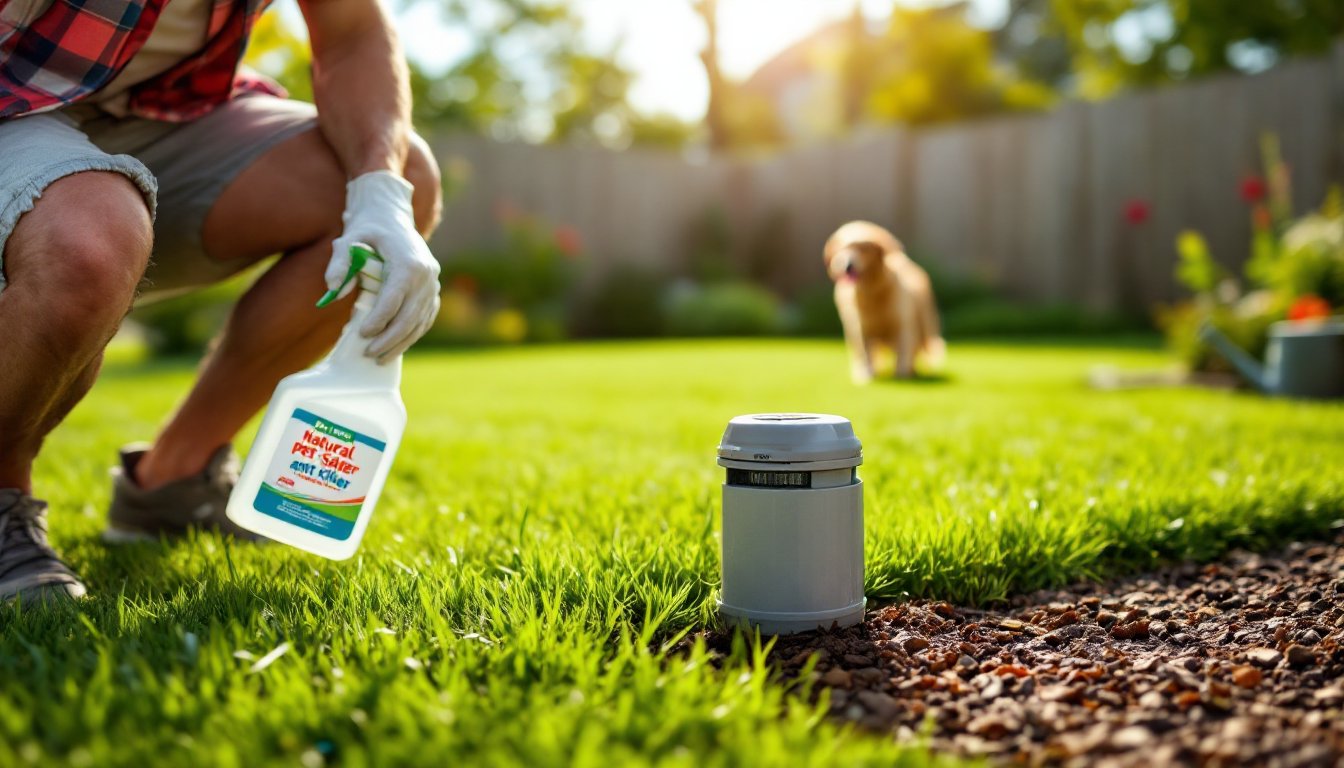
Ants aren’t just a nuisance, they can damage your property, invade picnic areas, and create unsightly mounds across your lawn. When sidewalk cracks become highways and your deck becomes their territory, outdoor ant killer sprays offer a practical way to reclaim your yard. Whether you’re dealing with fire ants, carpenter ants, or common pavement dwellers, understanding how different ant sprays work and how to use them safely will help you choose the right solution for your outdoor space. This guide walks you through the options, application techniques, and prevention strategies every homeowner should know.
Table of Contents
ToggleKey Takeaways
- Outdoor ant killer spray works through contact kill or residual action, with worker ants carrying pesticide traces back to the colony to collapse entire mounds without direct hits on the queen.
- Chemical-based ant killer sprays containing pyrethroids or neonicotinoids offer fast knockdown and 4–8 weeks of residual protection, while natural alternatives like essential oil and diatomaceous earth sprays are safer for families but require more frequent reapplication.
- Early morning or late evening applications between 50°F and 85°F are most effective, and treating the surrounding soil to 2–3 inches with a 12–18 inch radius around the mound maximizes spray penetration and colony elimination.
- Always wear protective equipment including gloves and eye protection, apply sprays when kids and pets are indoors, and keep treatments away from water sources and flowering plants to protect non-target insects.
- Preventing future ant infestations requires eliminating food sources, reducing moisture around foundations, sealing cracks and entry points, and monitoring your yard monthly during warm months to catch new colonies early.
How Outdoor Ant Killer Sprays Work
Outdoor ant killer sprays work through two primary mechanisms: contact kill and residual action. Contact killers like pyrethrins (derived from chrysanthemum flowers) or synthetic pyrethroids stun the nervous system on impact, dropping ants within minutes. Residual sprays leave a chemical layer on soil and plants that continues working for days or weeks, affecting any ant that walks across treated surfaces.
Most commercial outdoor ant sprays target the colony indirectly. When worker ants return to the nest after contact with the spray, they carry traces of the pesticide back to the queen and larvae. This is why even small applications can eventually collapse an entire mound, the queen never leaves the nest, so direct hits aren’t necessary. Some sprays, like those containing dinotefuran or imidacloprid, work as neonicotinoids, disrupting nerve signals in insects more effectively than older formulations.
Timing matters. Early morning or late evening applications catch ants when they’re most active and foraging. Temperature also plays a role: most sprays work best between 50°F and 85°F. In extreme heat, ants retreat deeper underground, reducing the spray’s effectiveness.
Types of Outdoor Ant Killer Sprays
Chemical-Based Formulas
Synthetic chemical sprays are the industry standard for fast, reliable ant control. Products containing pyrethroid ingredients (like bifenthrin or permethrin) offer broad-spectrum insect control and lasting residual action, often 4 to 8 weeks depending on weather and product formulation. These sprays are cost-effective and work on most ant species, including fire ants and carpenter ants.
Imidacloprid-based sprays are another reliable choice, particularly for stubborn colonies. These neonicotinoids penetrate ant exoskeletons more efficiently than pyrethroids, making them ideal if previous applications haven’t worked. Both types typically come as ready-to-spray bottles (easiest for homeowners) or concentrate formulas (more economical for larger properties). Ready-to-spray options eliminate mixing and guesswork: concentrates require a pump sprayer and careful dilution per label instructions.
Chemical sprays aren’t without trade-offs. Pyrethroids are toxic to aquatic life, so avoid spraying near ponds or streams. Always check your local regulations, some areas restrict certain pesticides. Benefits include fast knockdown, proven efficacy, and affordability. Downsides: potential harm to non-target insects (including pollinators if applied to flowering areas) and repeated applications may be needed for severe infestations.
Natural and Organic Options
Homeowners seeking gentler alternatives can turn to essential oil-based sprays and botanical insecticides. Products containing cedarwood oil, clove oil, or cinnamon oil deter ants and disrupt their pheromone trails without synthetic chemicals. These are safer around children and pets when used as directed, though efficacy varies and reapplication is often needed every 1–2 weeks.
Diatomaceous earth (DE) sprays, specifically food-grade formulations, work mechanically. The fine powder damages ant exoskeletons on contact, causing dehydration. DE requires direct contact and won’t harm non-target insects if you’re selective with application. The downside: DE loses effectiveness when wet, so reapplication after rain is necessary.
Spice-based and soap-based organic sprays are safer for edible gardens and areas where kids play frequently. But, they’re slower-acting and less residual than chemical options. Zevo Ant, Roach and for combining plant-based actives with modern formulation, offering a middle ground between quick knockdown and chemical-free safety.
How to Apply Ant Killer Spray Effectively
Proper application is half the battle. Start by identifying the ant mound’s location and extent. If you see multiple mounds, prioritize: fire ants and carpenter ants deserve immediate attention, while pavement ants might be lower priority unless they’re invading your home.
Step-by-step application:
- Prepare the area. Clear away loose mulch, grass clippings, or debris around the mound. This gives the spray direct contact with soil and helps it penetrate.
- Choose your tool. Ready-to-spray bottles work for small infestations: a pump or hose-end sprayer handles larger yards more efficiently. For concentrate formulas, follow dilution rates exactly, too weak wastes money, too strong risks runoff and plant damage.
- Apply generously but don’t oversaturate. Soak the mound and surrounding soil to a depth of 2–3 inches. The spray should drench the area, not create puddles. Most labels recommend treating a 12–18 inch radius around the mound.
- Don’t disturb the colony. Avoid trampling or poking the mound before or immediately after spraying. You want foragers to return to the nest carrying the poison.
- Retreat as needed. One application rarely eliminates a large colony. Plan a second treatment 7–10 days later if you see activity. Persistent infestations may require monthly applications during warm months.
Timing and persistence separate successful DIY ant control from repeated failure. Home maintenance checklists and before populations explode. If a mound is near your foundation or inside a wall void, contact a licensed pest control professional, carpenter ants especially warrant expert evaluation.
Safety Tips When Using Outdoor Sprays
Pesticides demand respect. Even products labeled “natural” or “organic” can irritate skin and eyes at high concentrations.
Essential safety practices:
- Wear appropriate PPE. Chemical sprays require nitrile gloves, eye protection (goggles), and a respirator mask if applying concentrate. Organic sprays are gentler but still warrant gloves and eye protection.
- Apply during low-traffic windows. Spray early morning or late evening when kids and pets are indoors. Keep everyone away from treated areas for at least 2–4 hours, or until the spray dries (check the label).
- Protect pollinators. Never spray flowering plants or areas where bees forage. If your yard has vegetable gardens, avoid spraying within 10 feet of blooming crops.
- Keep sprays away from water sources. Pyrethroids and neonicotinoids are highly toxic to fish and aquatic invertebrates. Don’t apply near ponds, streams, or storm drains.
- Store safely. Keep all pesticides in original containers, away from food and pets. Store in a cool, dry place out of reach of children.
- Read the label. Every product has specific instructions about dilution, application rate, re-entry intervals, and safety precautions. The label is the law, follow it.
If someone ingests or has a severe reaction to a pesticide, contact Poison Control at 1-800-222-1222 immediately.
Preventing Future Ant Infestations
Killing ants is temporary: preventing new colonies from settling is permanent strategy. Ants seek three things: food, water, and shelter. Remove those incentives.
Eliminate food sources. Pick up fallen fruit and dead insects promptly. Don’t leave pet food outdoors. Seal garbage cans tightly and keep compost bins at least 10 feet from living spaces. Ants farm aphids for their honeydew secretions, so controlling aphids on plants and trees disrupts their food supply.
Reduce moisture. Fix leaky irrigation lines and downspouts. Ensure soil drains well around patios and structures. Damp soil near your foundation is an open invitation.
Seal entry points. Caulk cracks in concrete, gaps around pipes, and openings where utilities enter your home. Carpenter ants especially exploit small gaps: sealing them prevents indoor colonies before they start.
Create barriers. Diatomaceous earth applied as a dry barrier around the foundation perimeter can deter foraging ants. Reapply after rain. Some homeowners use boric acid powder in diluted bait stations (never broadcast boric acid, it’s toxic if concentrated), but this requires careful placement away from pets and children. Gardening guides and home improvement how-tos often emphasize landscape maintenance as the foundation of pest prevention.
Monitor and act early. A single mound found in spring is far easier to eliminate than a dozen in summer. Walk your yard monthly during warm months and treat new colonies immediately.